Updated: October 23rd, 2026
- A persistent warm anomaly has been observed along much of the California coast since September 2025 (see Coastal Conditions, Offshore Conditions).
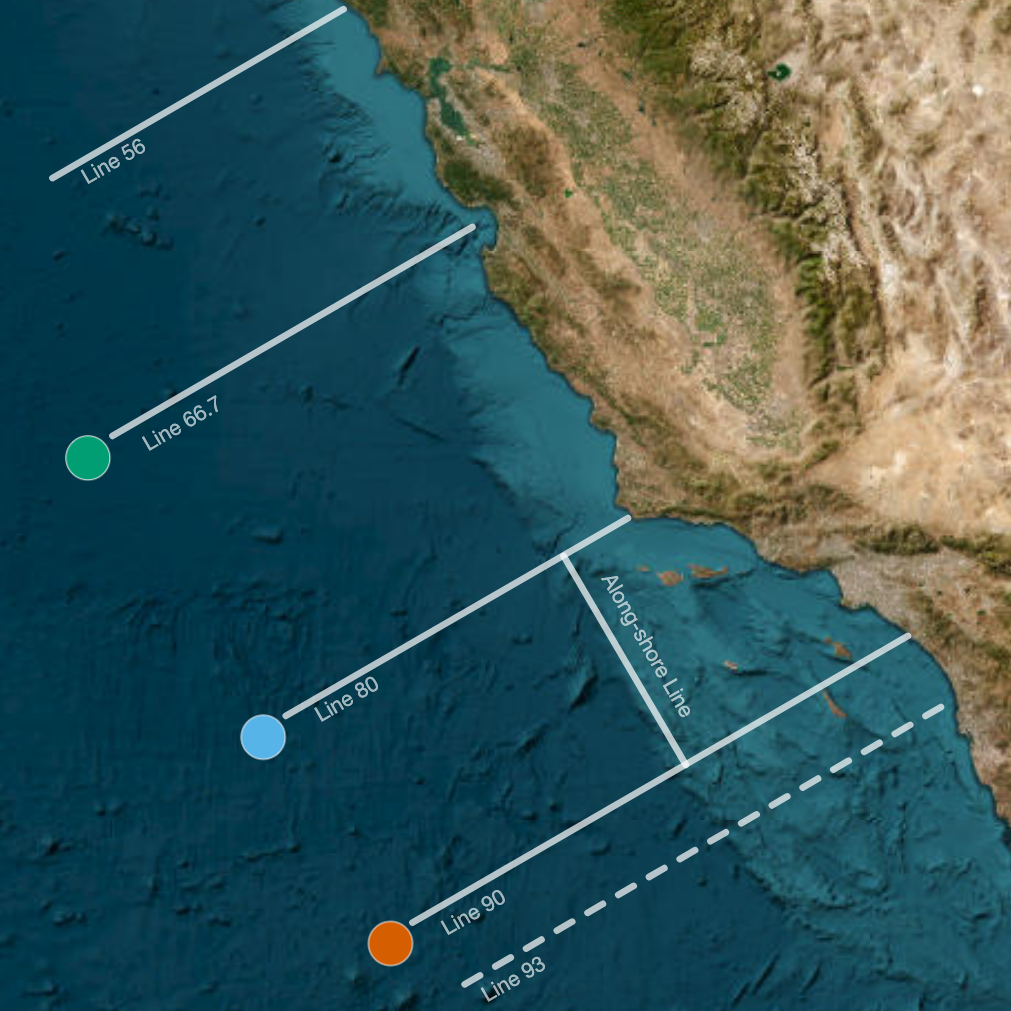
- El Niño temperature signals are now evident in Southern California, both at shore stations and along the glider lines (see Gliders).
- The ocean off Central California is warming in a way that points to El Niño. Instruments on MBARI’s M1 mooring, a long-running ocean observing buoy in Monterey Bay, are recording unusually warm water 60 meters (about 200 feet) below the surface (see Moorings). Warming at depth like this is a classic sign that El Niño has reached our coast.
- In Northern California, upwelling has brought short bursts of cooling. These dips interrupt the warm anomaly but haven’t reversed it (see Upwelling).
- Much of this warmth started as a marine heatwave before El Niño arrived. Earlier this year, glider temperature anomalies on Lines 66.7 and 80 were the largest in the 20-year glider record.
- California’s ocean observing systems provide real-time and forecast data to track El Niño’s arrival and impacts along the coast.